

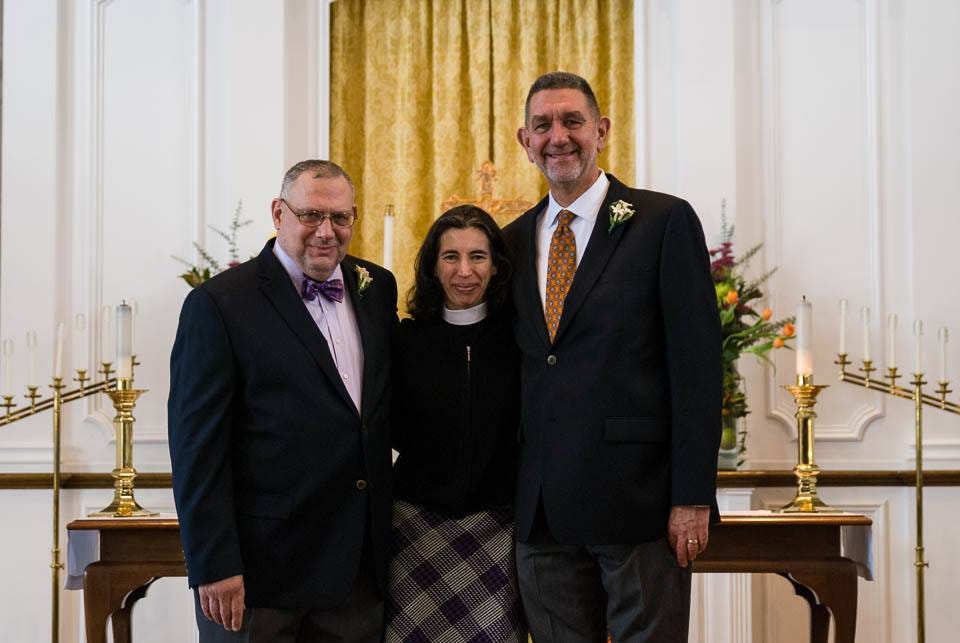
I’m celebrating my own wedding anniversary by not being online today! And by sharing the the homily I gave at the wedding of two very dear friends, a dozen years ago…
‘I guess there are lots of ways to get married. Some people marry someone they hardly know - which can work out, too. When you marry your best friend of many years, there should be another name for it. But the thing that surprised me about getting married was the way it altered time. And also the way it added a tenderness that was somehow completely new.’
This is a quote from an article in Rolling Stone Magazine by the performance artist Laurie Anderson; a tribute to her husband, Lou Reed, who died a few weeks ago. Anderson and Reed were a couple for 16 years before they married in 2008.
And I think she is right, in so many ways, about the fact that there are many ways to be married, and to get married.
Of course, marriage is optional these days, more so than at any other time before, and because of this, there are so many ways to define marriage, so many meanings it may possess, so many expectations we bring to it, some of them contradictory.
We marry for love, for companionship, for stability. We marry for family, for friendship, for passion, for status and success. We marry because we cannot stand living another day without being related to one another and we marry because we never want to be alone. We marry ‘good enough’ and ‘I can’t believe how lucky I am’ and beautiful and talented and wealthy and ‘this is my best friend.’
We also marry in barns and backyards, on the beach and at the finish line of the marathon, all by ourselves or with an Elvis impersonator or a few of our family and friends or with hundreds or even thousands of witnesses.
We are married by clergy and judges and ship’s captains and comedians and friends and relatives who filled out a form on the Internet and now can claim themselves ‘ordained.’
And in this context, it is hard not to point out that not everyone is free to marry, not every love is equal, and not every marriage is recognized or understood. Some are denied, some are rejected, some are even mocked and ridiculed. Some seek to marry in ways that are not mainstream, are hardly mentioned in love songs and rarely portrayed on a screen.
And today we are here to celebrate one of those kinds of marriages, the kind you may have heard about or read about somewhere, maybe your cousin had one or your roommate from college, we know they exist but mostly they happen to other people.
And no, I don’t mean the fact that these are two men marrying each other, or even a Slovenian finding love with a Dutchman, a tailor with a chef, or the rarest of rare, a verger and a priest committing their lives to one another.
What makes this marriage unusual, and not easily understood in the world that we currently live in, is the fact that it is a sacrament, a union between two committed followers of Jesus, a covenant that is first and foremost about our relationship with God.
‘You did not choose me but I chose you,’ we hear from the Gospel of John today, and in this is the truth of what we claim as Christians, what makes us strange in all the crazy world of ways we can and do commit our lives to one another.
We have the audacity to believe that this love that Peter and Anthony celebrate here today is a manifestation and an outward and visible sign of the love they were first created in, the love that redeems and sustains them.
That without this love, the love of God which chose them, which chooses us to begin with, there would be nothing to marry, no hope of covenantal life together, no mysterious intertwining of two lives into one.
And what makes us odd and rare as Christians is that we just don’t believe we can do it alone, or even that we get that choice.
And so this is a day, this is a ceremony, that is not all about us, this is not just Peter and Anthony’s special day, but one day, one celebration among millions over time, where what we are celebrating is NOT us, actually, but the love of God which is manifest in this place, in this moment.
This is more strange in the world today than a skydiving Elvis impersonator wedding featuring elements of Native American spirituality and performed by a belly dancer.
Is it better?
I guess it kind of depends on what we mean by better. Will it make this marriage last as long as any other kind of marriage? Does it somehow make us happier? More loving? Is it as meaningful as it would be if we just made it a tribute to all the adorable things about Peter and Anthony (of which there are many!) and how good they are for each other (which is very!)?
To be honest, I don’t know. It makes me think, though, that Christians get ourselves in all sorts of trouble when we start talking about our faith as if it is primarily a life improvement project.
And we get boring fast when we start sounding like we have all the answers, as if our understanding of marriage is just one of many choices about how we will merge our lives together. But as I said before, what makes this kind of marriage different is that we don’t believe we HAVE a choice.
Here we are, Anthony and Peter, and all of us who have heard God’s call to us, who have understood God’s choice of us, and because of this we know that there IS no life outside of that love, not for any of us individually, not for how we live in community, and certainly not when two of us dare to be joined together in love.
And it is daring, yes?
It is the very essence of the thing, the common thread of the drive through Vegas chapel wedding and the weddings of royals in massive cathedrals, the union of two long time partners and the giddy joining together of two people barely out of their teens, what gay marriage and straight marriage and young love and old love and finally finding love again all have in common:
two people dare to say out loud that this is it, I am forsaking all others and sharing my life with you, against all odds and for all time.
And Christians certainly cannot claim we do this better, but at least we can say that this kind of risk is something we understand.
One of the most infuriating bumper stickers that I have seen out there is the one that says, ‘Christians are not perfect, just forgiven.’ Infuriating because really, having to remind people you are not perfect is kind of a way of oh so humbly admitting that you might be mistaken for someone who is.
And also because I believe there is an element of truth in this thought, although I might have put it like this:
Christians are people who know what sin is, and who know what it is like to be forgiven.
Because accepting God’s choice of us is accepting that God loves us no matter who we are, no matter what we do, no matter how many times we fail at loving God back, and at loving one another.
Which is the terrific good news of our whole lives, but it is exceptionally good news when we step into the beautiful and challenging call of being married.
And so of all the ways of being married, this one is a no-brainer for us, quite literally. Having given our hearts to God, when we find someone else we want to give our hearts to as Anthony and Peter have found each other, our only choice is to dwell in this love that saves us from all lovelessness.
Peter and Anthony, I wish I could tell you that being chosen by God and being followers of Jesus and binding yourselves to the strong name of the Trinity here today will absolutely guarantee a life together that will never break.
But I think I can say instead that it will indeed guarantee a life in which broken things are to be expected, and redeemed.
And it will insist on a life in which you recognize your sinfulness, because really, what is a life of love and intimacy if not slowly learning, with many mistakes along the way, to share our real and not always beautiful selves with each other?
And it will never let you forget that what you share here today, and what you vow, is about both the particulars of your own lives and hearts and the great, glorious love of God that created the whole world and all that is in it. And in this is being chosen by God who forgives, redeems, strengthens and makes whole again, in this is a very real chance every day to believe this and practice it in your life together, no matter how many times you may fail. In this is the unique, unfathomable gift of resurrection, which is a surer foundation, I think, than anything else we could ever construct on our own, a love that never lets us go, even when we are parted by death.
‘In this is love, not that we loved God but that he loved us.’ This is what has chosen you, my friends, and what you marry into today.
-- the Rev. Canon Catherine Caimano. Preached at the wedding of the Rev. Peter Faass and Mr. Anthony Kastellic. Christ Episcopal Church, Shaker Heights, OH. November 17, 2013.
At Free Range Priest, we’re reimagining ministry in the digital age.
Subscribe to any (or all!) of these publications to be part of innovative ministry for the future of church.


Yes …thank you. Puts the emphasis where it belongs - at the root of our relatedness through Christ.