

Sacred Space still matters
On the evening of April 15, 2019, a fire broke out beneath the eaves of Notre-Dame Cathedral in Paris.
What began quietly soon became catastrophic. By nightfall, the spire had collapsed, and flames consumed most of the roof.
Firefighters battled the blaze through the night. By morning, they had managed to save the main structure—the bell towers, rose windows, and stone walls that had stood for more than eight centuries.
But the roof was lost.
The fire burned through what was known as “the forest,” a dense lattice of oak beams dating back to the 13th century. Wood cut centuries before Columbus crossed the Atlantic vanished in hours.
And as it burned, thousands of people gathered along the banks of the Seine.
They stood in silence.
They prayed.
They sang hymns.
Some wept openly.
Others simply watched, unable to look away.
Suddenly, the building mattered
No one shouted, “Empty the pews.”
No one argued that the building no longer mattered because church attendance had declined.
No one suggested that the space had outlived its usefulness.
In that moment, people understood—almost instinctively—what sacred space means.
The loss of a church is never just about bricks and beams.
It is about memory.
Identity.
Continuity.
Community.
Hope.
It is about the spiritual and cultural good a place can hold—even for people who may rarely, if ever, worship there.
Moments of crisis have a way of revealing what we actually value.
Notre-Dame showed us that when sacred space is threatened, people recognize its importance immediately.
We are losing sacred spaces much more quietly
Most church buildings don’t disappear in spectacular fires broadcast around the world.
They disappear slowly.
Attendance declines.
Budgets tighten.
Deferred maintenance accumulates.
Rooms sit empty six days a week.
Churches become “dead spaces” - think about that - a place where we celebrate resurrection becomes known in the community as a “dead space.”
Eventually, someone asks whether the congregation can afford the building anymore.
That’s a reasonable question.
But I don’t think it’s the only question—or even necessarily the most important one.
Before asking what a church building is worth, we should ask what it could be for.
What role could this space play in its neighborhood?
Who could gather here?
What community need could be met here?
What partnerships could emerge?
How might a building that feels like a burden on Sunday become an asset for ministry throughout the week?
Paid subscribers to Free Range Priest join the Substack Seminary Newsletter - and join us for Thursday Conversations during Quarters (3:30pm Eastern, replay the following Monday)
The building isn’t the church—but it still matters
We’ve spent decades reminding ourselves that the church is not the building.
That’s true.
But sometimes we’ve repeated it so often that we’ve forgotten the other side of the equation:
Buildings matter.
Physical places shape communities. They hold memories. They create opportunities for encounter. They provide places where people can worship, eat, learn, organize, grieve, celebrate, receive help, and simply belong.
A church building doesn’t have to become a museum to be worth preserving.
Nor does preserving it mean keeping everything exactly as it has always been.
Sometimes honoring a sacred space means imagining new ways for it to serve the community around it.
'We can start something new, but we need to stay connected'

Substack Seminary livestream Conversations.
This is the question behind my new book
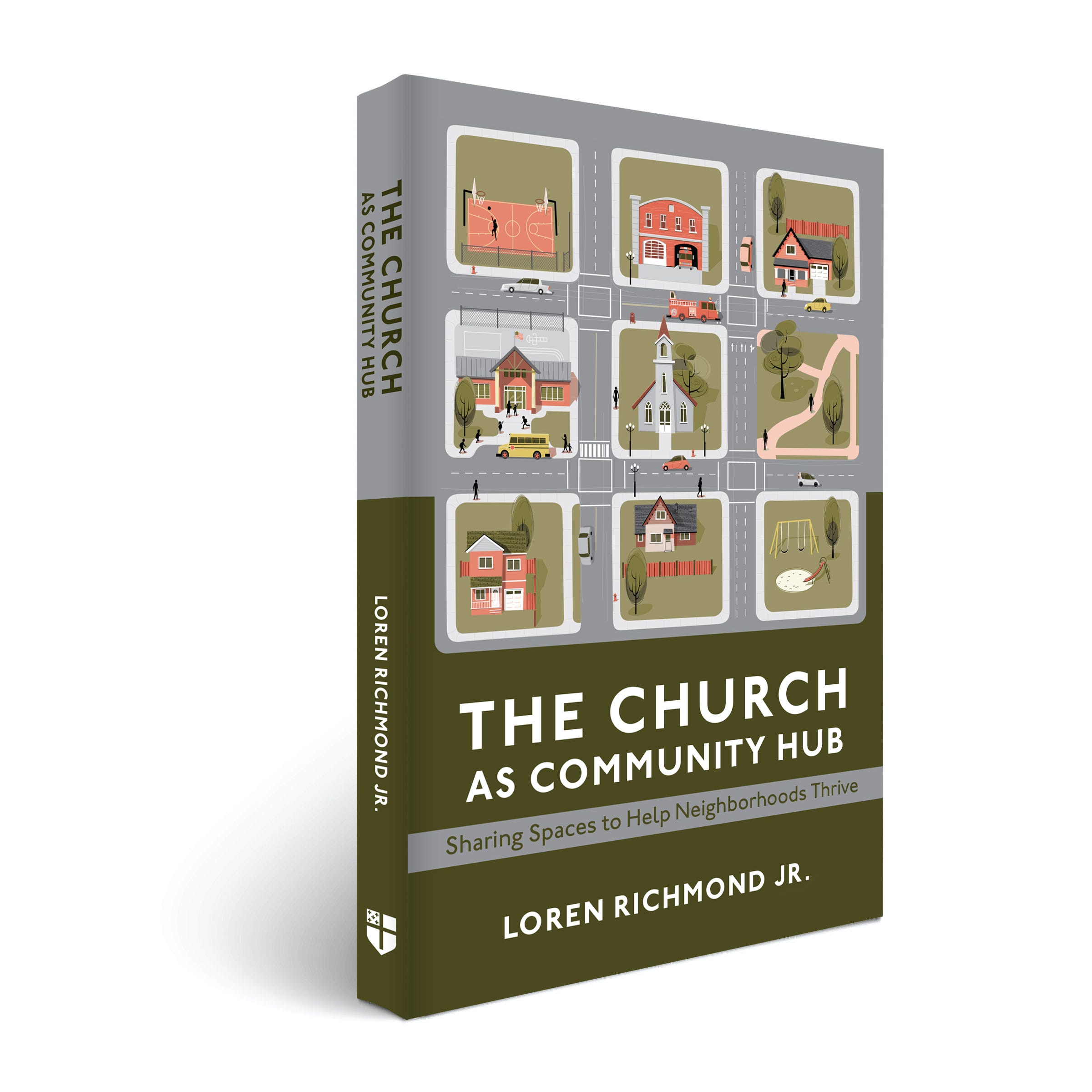
This is the central concern of my new book, The Church as Community Hub: Sharing Spaces to Help Neighborhoods Thrive.
The book explores how congregations can think differently about buildings, land, partnerships, and community engagement—not primarily as strategies for saving struggling institutions, but as resources for mission.
Because the question isn’t simply:
How do we save our building?
It’s:
How can this building help us participate more fully in what God is already doing in our neighborhood?
Those are very different questions.
And they lead to very different possibilities.
Why this matters for Substack Seminary
This is also exactly the kind of question we’re asking in Substack Seminary.
What have we inherited?
What is still serving the mission?
What needs to change?
And how might the resources already in our hands become part of whatever God is calling us toward next?
Notre-Dame’s fire reminded millions of people that sacred spaces matter.
Churches shouldn’t have to wait until they’re about to lose theirs to discover why.
If you’re wrestling with the future of your church, its building, or its relationship with the surrounding community, The Church as Community Hub was written for that conversation.
Check out the book here: https://churchpublishing.org/products/9781640659988-the-church-as-community-hub

Substack Seminary is a Newsletter that is part of
a Free Range Priest subscription.
During Quarters, you’ll get blogs thematic blogs:
Q1: Vision & Systematic Change
Q2: Structure & Business Model
Q3: Theology & Community
Q4: Technology & Collaboration
Paid FRP subscribers join Conversations live on Thursdays at 3:30 Eastern (during Quarters), and get the replay + chat invitation on Mondays.
You don’t have to do this alone. Subscribe to join the ‘home for weirdo pastors’.
At Free Range Priest, we’re bringing church to people.
Bite-sized ways that YOU can re-imagine ministry and get ‘unstuck’.
Subscribe to re-discover ministry JOY.
Sign up for the Newletters - and manage your preferences HERE.


